Choosing the Right Industrial Grease for Food and Beverage Applications
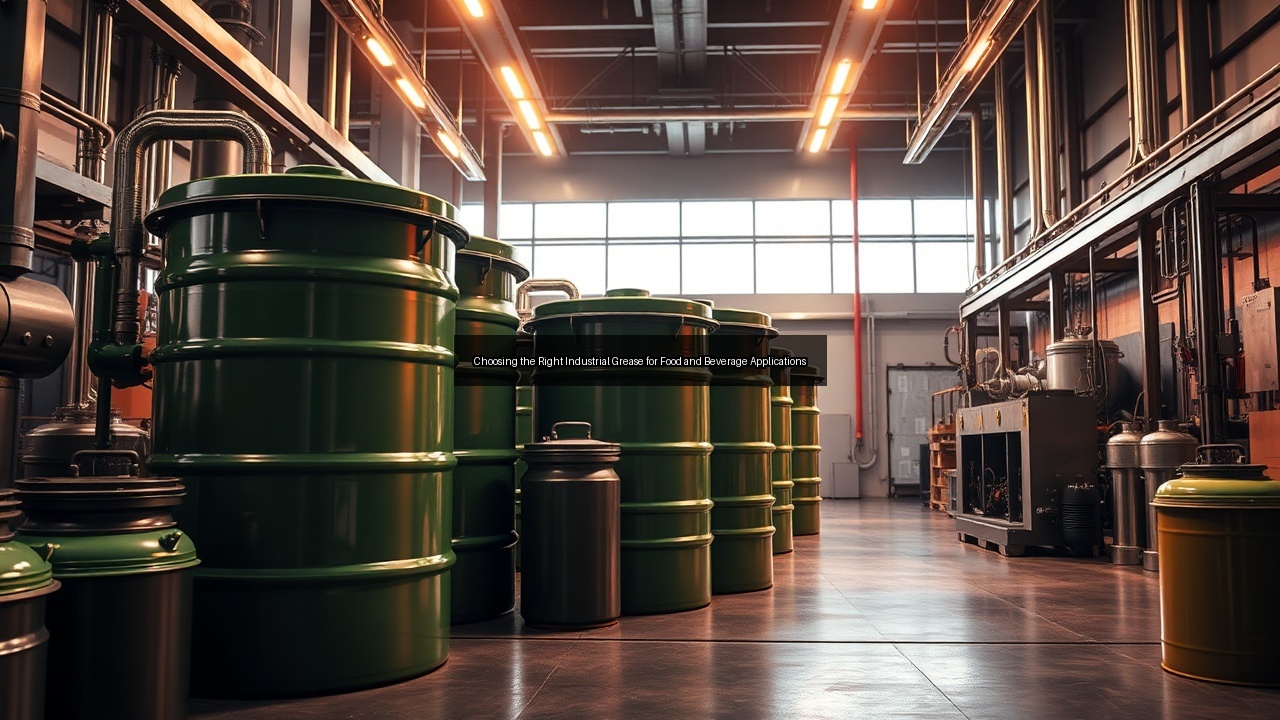
Understanding Industrial Greases for Food and Beverage Applications
What Are Industrial Greases?
Industrial greases consist of base oils thickened with agents like lithium, calcium, or fumed silica to create semi-solid lubricants that stay in place under load. These formulations deliver consistent lubrication where liquid oils would migrate or evaporate. In food and beverage plants, workers apply industrial greases to bearings, gears, and chains that operate near mixers, conveyors, and packaging lines. The thickener holds the oil in contact with metal surfaces while additives control oxidation and wear. Unlike gear oil that flows freely, grease forms a protective film that resists washout from water or cleaning agents. Proper selection prevents metal-to-metal contact that generates friction and heat. Plant teams often stock multiple grades to match different speeds and loads across equipment.
Importance of Lubrication in Food Processing
Effective lubrication keeps production lines moving without unplanned stops that cost thousands per hour. Industrial greases reduce friction between moving parts in ovens, fillers, and palletizers, which extends component life and maintains output consistency. In food and beverage facilities, every bearing must run smoothly to avoid product contamination from metal particles. Regular application of the right grease also limits energy use by lowering drag on motors and drives. When lubrication fails, temperature spikes accelerate wear and force emergency repairs during peak production. Operators track relubrication intervals to match operating hours and conditions. Consistent use of quality greases supports both equipment reliability and regulatory compliance for safe food handling.
Key Properties of Greases Used in Food and Beverage
Temperature Tolerance and Melting Points
Food processing equipment often cycles between cold storage and high-heat zones near ovens or kilns. Industrial greases must maintain structure across wide temperature ranges without melting or hardening. Lithium-based products typically handle continuous operation up to 120°C before softening, while calcium greases offer better stability in wet, lower-temperature environments. Specialty grades with fumed silica thickeners resist melting even above 200°C, making them suitable for bakery lines or sterilization tunnels. When grease reaches its melting point, the base oil separates and leaks, leaving surfaces exposed to friction and wear. Operators check dropping points on data sheets to match grease performance with actual equipment temperatures. Proper temperature tolerance prevents downtime and keeps lubricant films intact during heat spikes.
Resistance to Contamination
Food and beverage environments expose lubricants to water, cleaning chemicals, sugar, flour, and fruit acids that can degrade ordinary greases. High-quality industrial greases incorporate thickeners and additives that repel these contaminants and maintain adhesion to metal surfaces. Calcium-based formulations excel in washdown areas because they stay pliable even after repeated water exposure. Lithium greases with proper inhibitors resist oxidation caused by airborne particles. When contamination penetrates the lubricant film, friction rises quickly and metal surfaces begin to pit. Plants select greases with strong barrier properties to avoid product recalls from foreign material. Regular inspection of seals and grease purge points helps detect early signs of intrusion before damage spreads.
Friction Reduction and Performance
Grease performance centers on its ability to separate moving surfaces and minimize energy loss from friction. Industrial greases formulated for food and beverage applications contain extreme-pressure additives that protect under heavy loads on mixers and extruders. Lithium thickeners provide excellent mechanical stability so the grease does not soften under shear. Calcium versions offer good pumpability in centralized systems while still reducing wear. Fumed silica greases deliver low starting torque in cold rooms and maintain film strength at elevated temperatures. Consistent friction reduction translates directly into lower electricity costs and longer bearing life. Maintenance teams measure vibration and temperature trends to confirm that the selected grease continues to deliver expected performance over time.
Types of Industrial Greases Suitable for Food and Beverage

Lithium-Based Greases
Lithium thickeners remain the most common choice for general-purpose industrial greases in food plants. They combine good water resistance with high dropping points and mechanical stability, making them reliable for bearings on conveyors and pumps. Many lithium greases include additives that protect against rust in humid processing areas. Their smooth texture allows easy application through grease guns and automatic systems. Lithium formulations handle moderate to high speeds without excessive channeling. When paired with food-grade base oils, these greases meet stringent safety requirements while delivering long service intervals. Plants often standardize on lithium products to simplify inventory and training for lubrication crews.
Calcium-Based Greases
Calcium thickeners excel in wet, low-speed applications common in bottling lines and dairy processing. These greases resist emulsification even after prolonged contact with water or steam. Calcium formulations provide natural corrosion protection without relying on heavy metal additives. Their lower melting points suit equipment that never exceeds moderate temperatures. Because calcium greases stay tacky, they adhere well to open gears and chains exposed to washdown routines. Maintenance staff appreciate their pumpability in cold conditions where other greases stiffen. When equipment requires frequent relubrication, calcium products offer cost-effective performance without sacrificing protection against friction and wear.
Specialty Greases with Fumed Silica
Fumed silica thickeners create greases that perform where conventional soaps fail, especially in high-temperature zones near kilns or frying equipment. These non-melting formulations maintain consistency across extreme temperature swings. Fumed silica greases resist bleeding and hardening, which reduces relubrication frequency in hard-to-reach locations. Their inert nature makes them compatible with many elastomers and plastics used in food machinery. Plants also value the low volatility that prevents oil migration onto product surfaces. Although initial cost runs higher, the extended service life and reliability often justify the investment for critical applications. Operators monitor these greases closely because over-greasing can still cause issues despite their stability.
Selecting the Right Grease: Factors to Consider
Compatibility with Equipment and Materials
Choosing industrial greases requires matching thickener type and base oil to the specific metals, seals, and plastics in each machine. Lithium greases work well with most bearing steels but may swell certain rubber compounds. Calcium products generally show broader elastomer compatibility in wet areas. Fumed silica greases avoid chemical reactions with sensitive coatings on food-contact surfaces. Equipment manuals list recommended lubricant specifications that include NLGI grade and base oil viscosity. Mismatched grease leads to seal leakage, increased friction, or premature bearing failure. Maintenance teams test new greases on non-critical equipment first to confirm performance before full rollout. Proper compatibility extends service intervals and protects capital investments.
Environmental Considerations
Food and beverage facilities must balance lubrication performance with environmental and regulatory demands. Many plants now select biodegradable base oils to reduce impact from incidental leaks or disposal. Greases that resist washout also minimize the volume of lubricant entering wastewater systems. Calcium formulations often require fewer additives, which simplifies environmental reporting. Operators consider temperature and humidity patterns in each production area to avoid over-lubrication that wastes product and increases disposal costs. Environmentally responsible choices also support sustainability goals that many brands promote to customers. Regular audits of lubricant consumption help identify opportunities to reduce waste while maintaining equipment protection.
Brand Reputation and Reliability
Established brands invest heavily in testing industrial greases under real-world food and beverage conditions. Their products deliver consistent batch quality that prevents unexpected lubrication failures. Reliable suppliers provide technical support to help plants optimize relubrication schedules and diagnose issues. Lesser-known brands may cut costs on additives or thickener purity, leading to shorter service life. Purchasing teams review field performance data and case studies rather than price alone. Long-term partnerships with trusted lubricant brands reduce the risk of supply disruptions during peak seasons. Consistent use of proven greases supports predictable maintenance budgets and uptime targets.
Maintenance and Relubrication Practices
Best Practices for Applying Industrial Greases
Successful grease application starts with clean fittings and correct quantities. Over-greasing forces seals to fail and attracts dust that accelerates wear. Under-greasing leaves metal surfaces exposed to friction and heat. Technicians follow manufacturer guidelines for purge volumes based on bearing size and speed. Automatic lubrication systems deliver precise amounts at timed intervals, reducing human error. In food and beverage plants, workers use dedicated grease guns labeled for each grease type to prevent cross-contamination. They also purge old grease completely when switching formulations. Proper technique ensures the new lubricant reaches all contact surfaces without trapping air pockets that reduce effectiveness.
Monitoring Lubrication Needs Over Time
Regular condition monitoring reveals when industrial greases no longer protect equipment adequately. Vibration analysis and thermography detect rising friction before catastrophic failure. Oil analysis of purged grease samples shows oxidation levels and contamination trends. Maintenance teams adjust relubrication intervals seasonally when temperature or production rates change. In high-load areas, more frequent checks catch early signs of thickener breakdown. Digital logs track grease consumption per asset and flag deviations from baseline. Consistent monitoring extends bearing life and prevents costly emergency repairs during production runs. Data-driven decisions also justify upgrades to higher-performance greases when conditions warrant.
Common Issues and Solutions in Grease Application
Hardened grease in fittings often results from incompatible products mixing or extended storage. Flushing lines with the correct solvent restores flow. Channeling occurs when grease fails to flow back into the load zone after shear; switching to a softer NLGI grade solves the problem. Water washout appears as milky grease at purge points and requires either better sealing or a calcium-based alternative. Excessive heat causes oil separation that leaves a dry residue; fumed silica products resist this failure mode. Tracking these issues in maintenance records helps plants refine their lubricant selection process. Proactive solutions keep friction low and equipment running reliably across all shifts.
See Also
- How Temperature and Contamination Affect the Lifespan of Industrial Lubricants
- Unlocking the Secrets of Industrial Greases for Optimal Machinery Performance
- Exploring Lithium and Calcium Based Greases for Heavy-Duty Industrial Use
- The Science Behind Industrial Greases and Their Role in Reducing Friction